Some zinc disks with pictures on them. The smaller one was declared to be twice as valuable as the larger one.
Of course we all read in elementary school Marco Polo’s description of fiat currency, when he first encountered this type of monetary system being used in Emperor Khan’s territory late in the 13th century. We know that private issuance allows the issuers to create as much coin for themselves as they want without oversight, enabling the currency issuers to arrive at “wealth beyond your imagination” at the expense of the users of their currency. We know fiat money enables gross corruption and capital misallocation, its effects being “without exception and without possible salvation unmitigated disaster”. We know Nixon ushered in the current version of the fiat dollar in 1971 when he defaulted on gold obligations, exactly 51 years ago today.
We also know that we are thirteen years into a new currency era, now that we have readily available publicly auditable and verifiable cryptocurrencies which have grown immensely in their first decade. We know that those who have started using them in their businesses have for the most part hugely profited from using this technology, we know it can be easier and cheaper to use crypto than the fiat notes or third party banking / merchant / card services. We know we could prepare for inevitable economic troubles by accepting some public currencies alongside our current fiat systems, with very little effort. We know that the worlds wealthiest people have started using and collecting the new monies. We know that continuing to use the unconstitutional fiat currency is making us poor, concentrating wealth in the hands of a few, as well as enabling the most environmentally destructive practices on the planet.
However, despite these clear and well know facts, many people have still not started accepting any public currencies for their products, labor, and property. How could this be? It seems beyond comprehension that any organism, crystal, molecule, or life form of any kind would continue to contribute to their own demise for no reason even though alternatives are readily available. However, primate behavior is quite remarkable; our psychology quite complex. Don’t attribute to psychosis what might be explained via social pressure or other causes. There may be reasons for accepting only fiat dollars at our businesses and for our labor. Let’s take a look at those reasons!
10. The founding fathers were genocidal slave owners. One good way to get back at them is to support taxation without representation.
9. Fiat with paper and cards just makes better cocaine paraphernalia all around.
8. Don’t like my customers; want to drag them into a broken-by-design financial instrument so I can enjoy watching them cry when Blackrock buys them out.
7. Just had the completely wrong idea of what legal tender laws apply to.
6. It’s not my job to think about payment systems or what monies to use. My only political responsibility is to vote once every couple years.
5. Sound money is bad for the environment because the network uses energy. We should instead use only counterfeitable-at-zero-energy-cost fiat to make sure the military and the oil companies can get their green subsidies to save the environment. If the wealthiest people can’t print as much new money for themselves as they like, how are they going to afford the private jets which fly them to environmental conferences ?
4. Been in a coma since 1970, still believe there’s a gold standard.
3. Accepting something like bitcoin would make people think you were trying to get rich, which could ruin your reputation.
2. Don’t rock the boat. It’s safer to just play your position, own nothing, and be happy.
1. Just hate the USA, want to see its institutions plagued with corruption and its citizenry impoverished.
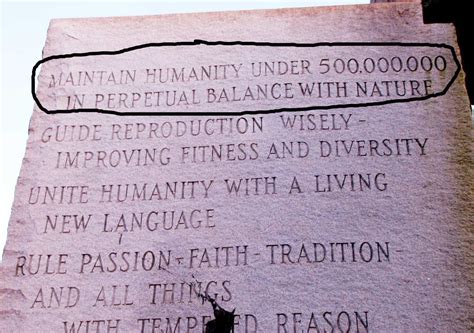
So apparently IQ is a way of assigning a number to your performance on any test of intelligence, based on a normal distribution of test takers where the number 100 is assigned to the mean score with 15 taken as the standard deviation. If this is the case, then what is the minimum (maximum) IQ? Well that would be when you score worse (better) than all 8 billion people on the planet.
Well there you have it, the highest possible IQ must be 192.89 and the lowest possible IQ must be 7.11. Seven eleven, it must be true, QED.
The holy Guiness Book however tells us that somebody had an IQ of 238. That’s more than 9 standard deviations away from the mean!!! What does that mean?
This means that in order to have that 238 IQ you have to be better than a population of 6.37 * 10^16. That’s a lot of persons!
Perhaps you are thinking that these tests don’t really have a normal distribution, perhaps the tail is thicker on the right for these pattern recognition or Stanford-Binet tests, making the above calculations somewhat invalid. Well yeah, maybe so. But then why would we be using this IQ normal distribution number to rate them? Pick another rating system. Chess players and downhill racers seem to have some pretty good systems for assigning a number to combatants ability to win, surely the Stanford-Binet sponsors could do something similar?
For a final exercise, lets calculate how many people need to beat you on an IQ test for your IQ to be negative fifty. I’ll let you plug the numbers into the calculator this time. I get something around 10^20, right around the number of possible rubix cube scrambles. QED!
Bill Clinton explaining entanglement of particles in different locations.
This one was inspired by a post by John Baez, reminding us that Maxwell’s equations are the seat of the photon and electromagnetism, bringing us back to his classic “What is a photon” which I encountered in some form on the newsgroups in apparently the late 90s. I was about to say how all the great online and education work of this guy and his stellar reputation shows that publication records aren’t really everything.. then I went and checked and it turns out he has an off the scale h-factor as well. Wow, salute to John Baez. I guess Tom Roberts, who I encountered at around the same time, salute to Tom Roberts, is a better example of how reputation is not well reflected by such indices, at least in his influence which I saw on my path through the physics literature.
So, on to “what is a photon?”. Capturing the thing in another “light”…. is Kim Stanley Robinson writing in “Ministry for the Future” :
<quote>
I zing and I ping and I bring and I bling. Freed to self in the heart of the sun, I banged around in there for a million years before popping out the surface and zipping off. Then eight minutes to Earth. In the vacuum I move at the speed of light, indeed I define the speed of light by my dance.
Into Earth’s atmosphere, exhibiting aspects both wave and particle but not either, I am a four-space conceptualized as an hourglass shape in three-space, where time and space cross in the human mind. Hitting things again, slowing down, breaking off brothers and sisters trapped in things, all the same, all without mass, all spin one, and so bosons, not fermions; one three-hundred-sixty-degree turn and I’m back where I began in that regard, while for fermions it takes seven hundred and twenty degrees of turning to get back to its original position; fermions are strange!
I am not strange, I am simple. Banging into atoms and moving them as I too move, simple as Newton, bang bang bang, the atoms of the atmosphere move more than they would have without my kick in their pants. That’s heat. Until I kick into something that captures me and I stop moving on my own. That or I might bounce off something I hit and head back out into space, become the light in the eye of some lunatic observer, looking up at the big blue ball and seeing me bang something in their retina. A blue pixel of the utmost granular fineness, so much so that the wave I make is easier to detect, maybe even easier to imagine. The wave/particle duality is a real thing, and both at once is hard to think, hard to see. It doesn’t really work, four-space in your three-space mind, no. I am a mysterious thing, massless but powerful. There are more of us than there are of anything else. Well, perhaps that’s not true. We don’t know about dark matter, which should be called invisible matter, we don’t know them or what’s going on there. Presumably its individual constituent elements are something like me, but maybe not; no one knows. All that stuff flies around as if in a parallel universe slightly overlapping ours, maybe just waves, in any case gravity works on it for sure, because its very existence has been revealed to us by its gravitation effects. If we are similar to those dark-matterinos, it is in the way that light and dark are similar. Two parts of a whole, perhaps. I am visible, I embody light itself; dark matter is not actually dark, it is invisible, and we don’t know how or what it is. Our absent self, our shadow, our twin. Although there are a lot more of them than us, maybe. A mystery among all the other mysteries, we fly through each other like ghosts.
But me, me, me, me, banging Earth, bouncing back up into the eye of an observer on the moon, then off again, immortal, immutable, I bang bluely on and on and on, and in the process, passing by just this once in a cloud of my brothers and sisters, we hit Earth and light it up, and the gas wrapping the planet’s hydrosphere and lithosphere gets warmer from our touch. My brothers and sisters follow me and they continue that warming.
What am I? You must have guessed already. I am a photon.
<endquote>
Very nice! So then what is a photon? Well that depends on what the meaning of “is” is. When we say what “is” a note, for example, correct answers could be “that dot on the music with a tail”, or “the sound waves which emanate when a key is pressed a harpsichord” or “a short bit of text written with intention of later reading for recalling or for reviewing information” or “a pulse of audible sound”. Similarly in the physics of quantum electrodynamics, the right answer to the question “What is a photon?” was given by our 42nd president: that depends on what the meaning of “is” is.
For example, lets consider that we see a signal on our oscilloscope:
An Oscilloscope showing a signal of an electromagnetic wave.
Is this a photon? Well, it’s an oscilloscope, not a photon. But is it a photon showing on the screen? Well the mechanism of light emission from the screen is one of excited electrons in phosphorus emitting light, so those are photons, yes. But what are they representing that came into the antenna? Well it appears to be a continuous electromagnetic wave, probably not from a quantized emitter such as an electron in an atom, so it appears this isn’t really a photon. But wait, how have the signals registered in our retinas? Well the light from the oscilloscope has induced quantized absorption of light via electrons in the atoms in our eyeballs. So, those are photons. What about the signals from those visual cells which arrive at our brain? Well nerve cells transmit signals in a more continuous fashion, so we might say those light impulses are not photons. However some signals are mediated by calcium ions, so if a single ion moves across a synapse, perhaps we have a quantized signal and again a photon.
As for the elusive faux-ton, that might have to await explanation from another head of state. Thanks for processing the photons from your screen and turning them into meaning in your mind!
(The following essay is by Dimitry Orlov of “Five stages of collapse” fame. Unfortunately it’s not that easy to find all his recent writings so I am posting this here. If you like it, go find him and support his work!)
In my 2016 book Shrinking the Technosphere I described the technosphere as a nonhuman global emergent intelligence driven by an abstract teleology of total control, a networked machine with some human moving parts (fewer and fewer every day), utterly devoid of any moral or ethical sense (but skilled in using morality and ethics for manipulative purposes). The technosphere can keep you alive and comfortable if it finds you useful but can just as easily kill you, its killing technologies being some of the most advanced. I made the case that we ought to work diligently on shrinking the technosphere; not eliminating technology altogether, mind you, since that would spell the death of billions, but reigning it in and becoming the master of it rather than it being the master of us.My book did define half the problem but, concentrating as it did on technology alone, it ignored the other half by placing an important question—What drives the totality of the human endeavor?—out of scope. Yes, the technosphere doesn’t particularly care whether we live or die. If we must shrink the technosphere, then to what purpose? The technosphere is powerful, and to wage battle against it requires some measure of heroism and wild abandon. But what is to motivate us to become heroes—fear of death? Well, fear has never produced a hero. Why be a hero if mere cowardice can produce similar results?What can control and shrink the technosphere is not you or me and our puny and pathetic efforts but cultural and civilizational forces beyond our individual control. In order to understand them, we first have to admit that nothing is out of scope. We need to start by examining the variety of religious mythologies that serve as the basis for most human motivations (the question of whether they motivate you individually, whether consciously or, as is more likely, subconsciously, being entirely beside the point). Some of them constrain the technosphere in purposeful ways while others allow it to run rampant. These mythologies, along with everything that is built up on top of them, comprise the noosphere of the Earth, which I will attempt to describe.The world has changed appreciably in the intervening years since I published this book, specifically in the direction of total control of the technosphere over our lives. Much of the world’s population has been monitored via their smartphones, ordered about, often seemingly at random, injected with experimental concoctions with unknown long-term consequences, forced to self-isolate and wear face masks. A certain not particularly lethal, quite possibly artificial respiratory virus has provided a convenient excuse—all to mask dire developments in the availability and affordability of fossil fuels and, as a direct consequence, of food, and the rapidly unfolding collapse of Western-dominated, “rules-based” globalist international order.In many parts of the world basic human freedoms have all but evaporated: people now live in a panopticon, continuously observed and monitored for signs of disobedience by their computers and smartphones, ubiquitous security cameras, their public speech censored by artificial intelligence algorithms. It would seem that we now live in a technological anti-utopia that would surprise both Orwell and Huxley whose books 1984 and Brave New World have been put into use as operating manuals rather than as cautionary tales. Meanwhile, entire swathes of human culture, from Woody Allen’s movies to Chaikovsky’s ballets, are being erased by a venomous new “cancel culture” that parallels Nazi book burnings of 1933 and brings to life Ray Bradbury’s Fahrenheit 451. The technosphere appears to have won; as of 2021, little stands in its way of sidelining the wise and old, brainwashing the young and foolish and replacing humans with widgets and AI algorithms.The methods I proposed in my book for shrinking the technosphere didn’t work, but I have since learned enough to try to fix the problem, at least from the point of view of understanding it better. To do this, we first have to zoom out and place the concept of the technosphere within its proper context. The technosphere is but one aspect of a larger intellectual scheme created by the Russian scientist Vladimir Vernadsky, a luminary of 20th century science who founded entire new scientific disciplines—biochemistry and radiogeology—and was one of the founders of genetic mineralogy and geochemistry. None of the other 20th-cenury scientists could compare with him in his breadth of knowledge. The pinnacle of his creativity was his teaching about the biosphere—a result of synthesis of ideas and facts from tens of different branches of natural science. Vernadsky was a student of Dmitry Mendeleev, who, with his invention of the Mendeleev Table, founded modern chemistry. Vernadsky was, in turn, the teacher of Igor Kurchatov, the nuclear scientist who, among others, provided the USSR with the nuclear deterrent that saved it from annihilation by the USA, which it planned to carry out in the years following its successful atomic bombing of Japan.These shining beacons of world science have been steadfastly ignored in the West. Mendeleev’s contribution is impossible to ignore, and so Mendeleev’s Table has been coyly renamed “The Periodic Table of Elements” while Vernadsky is hardly mentioned at all. And yet it is Vernadsky who provided the best conceptual framework for understanding life on Earth and humanity’s place within it—much better than James Lovelock’s amateur theologizing of an entirely imaginary and in its latest iteration supposedly vengeful Gaia. But Gaia is politically useful in threatening to unleash its sweet vengeance on anyone who dares to track carbon footprints across her sitting room rug. Of course, now that the Green New Deal has been cancelled due to a self-imposed shortage of totalitarian Russian natural gas with which to balance ragged electricity supply from solar and wind, it’s back to burning coal and Gaia, along with poor Greta Tunberg, have ended up on the slag heap of history, it has become clear that both of these figures were purely political and soon to be forgotten.Going back to actual science, let’s look at Vernadsky’s model, which encompasses pretty much all that should ever concern us. Omitting some details, the Earth is a ball with a solid iron core surrounded by molten or semi-molten mantle of silicate rock upon which floats a thin crust made up of lighter stuff that makes up the ocean floor and the islands and continents we inhabit. Nuclear fission reactions within the Earth generate heat which is dissipated through volcanism, tectonic plate movement and the warming of the oceans from the bottom up. Amusingly, the agenda-driven scientists of the Intergovernmental Panel on Climate Change have consistently flubbed even the simplest Earth science quiz, claiming that melting glaciers will cause sea levels to rise, neglecting to notice that both the land on which the glaciers rest and the ocean floor which their meltwater would push down are afloat in a sea of molten rock. If the land ice melts and runs off into the oceans (a process that would take at least a million years) earthquakes would cause the land to rise and the sea floor to fall, negating the effect.The biosphere (a term coined by Vernadsky) is a sphere located between the uppermost layers of Earth’s crust and the lower reaches of the stratosphere. This is where all of the living things are, while areas both above and below are entirely bereft of life. But that’s not all that’s going on. Since Homo sapiens evolved, the biosphere has been increasingly transformed by the effects of two more spherical entities. The noosphere (from the Greek nöos, knowledge or wisdom) is a sphere of human knowledge. The noosphere is what makes Homo sapiens sapient. There is also the technosphere (also a Vernadsky coinage) which encompasses the ever-growing grab-bag of technical tricks available to all Homo sapiens regardless of their noospheric differences and which has increasingly developed a primitive mind and an agenda of its own.For both the biosphere and the noosphere, diversity is key. Bombard Earth with asteroids or nuclear bombs, cover it with volcanic ash from volcanic eruptions, subtly alter its atmospheric chemistry by burning every bit of fossil fuel you can get your hands on—and it will bounce back, eventually, because once the dust settles some organisms that were previously lurking in the shadows will float up from the depths of the ocean or crawl out of some crevice and evolve to fill every newly available niche. Similarly with the noosphere: a certain set of myths (capitalism, communism, socialism, democracy, progress, climate catastrophism, universal human values, Washington consensus, rules-based international order, etc.) may flourish for a time, then suddenly perish in some sort of cataclysm or collapse, and other, perhaps newer, but most likely much older but once again popular myths will step out of the shadows and take their place.If you imagined that the noosphere encompasses what you know or consider to be common knowledge in some officially, internationally recognized sense, you would probably be wrong. The noosphere is a stack that includes social relationships, political traditions, history, language, local custom and law, traditions, religious observances and—this part may surprise you—at its foundation lie religious myths that give life meaning. Walk up to a random person and ask: “What is your life’s purpose?” If the answer is along the lines of “Work and play well with others” or “Have sex with lots of strangers” or “Stay safe and feed my family” than the Homo sapiens you are talking to may not be particularly sapient, since the same motivations might drive an ape, an elephant, a penguin or even a termite. A more interesting answer would be more along the lines of “Become one with my spirit animal” or “Enter into the Kingdom of Heaven” or “Break the cycle of death and resurrection by reaching nirvana.” A particularly interesting answer is “Be remembered forever, along with Alexander the Great and Genghis Khan.”In spite of their great diversity, the myths that serve as the foundational elements of the noosphere can all be sorted into categories identified by a member of the following set: {NULL, 0, 1, 2, 3}. These identifiers indicate atheistic, polytheistic, monistic, dualistic and trinitarian mythologies. These numbers do not obey the laws of arithmetic but behave in the following counterintuitive and non-obvious ways:Atheistic: NULL is NULLPolytheistic: 0 = ∞Monistic: 1≠1Dualistic: 1+1=1Trinitarian: 1+1+1=1ATHEISTIC MYTHOLOGIESNULL is NULL is NULL. NULL is different from zero: zero means that there is nothing there; NULL means that we neither know nor care what’s there. NULL is not equal to anything—not even to itself, since there are no grounds for comparison; therefore, all that can be said about it is that it is NULL—a tautology. There is an almost limitless variety of adherents of NULL, just as there is an almost limitless variety of broken pottery in the world’s landfills, dumps and middens, but a particularly pervasive example is Homo trivialis: the degenerate case of a non-sapient Homo sapiens, a man unconcerned with anything more lofty than a full belly, a satisfied libido and a warm, dry place to sleep. The typical Homo trivialis specimen is a satisfied consumer of sudsy beer, starchy and fatty foods and television sports. Or it might be a woman, her concerns laser-focused on her hair, nails and shoes, with surgically enhanced breasts, lips and buttocks as added extras and her interests limited to gossip and soap operas.Also among the adherents of NULL are the technosphere’s eager minions. These are the technophiles who see anything beyond a purely mechanistic conception of the universe as base superstition to be ridiculed, whereas his own idolizing and fetishizing of technology is not ridiculous at all, mind you! Several generations of science fiction writers have constructed an entire technospherical universe which you can traverse aboard the good little spaceship Spinal Tap which goes Warp 11 (but only in your juvenile imagination). In reality humans have never so much as poked their heads outside of low Earth orbit, all of the Apollo mission nonsense notwithstanding, and probably never will. It now turns out that Americans can’t go back to the moon because they don’t have the spacesuits. Those wonderful spacesuits they used to romp around on the Moon in a studio in Burbank, California, were gnawed to pieces by some space rats and they can’t make new ones because they lost the blueprint and then their dog ate it. This is all highly believable, of course, but only if you are gullible as a child.Among the adult population, there is also some number of philosophical rationalists. They are convinced that an entity whose existence cannot be proved (documented, attested, weighed, measured, made to pee into a cup, interviewed on camera, dragged into court to testify, etc.) does not exist. This stance is particularly humorous if approached from the point of view of a deity: if I were God (which, by the way, I am not; this is purely a thought experiment) then why would I condescend to being trifled with in this manner? As God, I would be well-disposed toward those who believe in Me and worship Me, perhaps even showing Myself to them, but only in purely mystical, ethereal ways so as not to trivialize my godlike nature. But I would mostly ignore those who don’t believe in Me and don’t worship Me as long as they leave My true believers alone. But I would strike down with great vengeance and furious anger those who attempt to poison and destroy My faithful. That part Ezekiel [25:17] got right. But they would not know that My name is the Lord when I lay My vengeance upon them; rather, they would not know what hit them and simply call it an “act of God” (in Whom they don’t believe). I am done speaking as God now, fun though that was.From the point of view of the technosphere, these are all ideal clients: either they are indifferent, obedient and easy to manipulate, with no agenda of their own, or they are zealous guardians of the technosphere who wish to technologize everything and would eagerly climb into a space capsule and be shot off into the endless emptiness of space just for the greater glory of it.Passionate, zealous adherents of NULL are the technosphere’s most faithful servants. Their insistence that everything must have a rational basis is very helpful in enlarging the technosphere’s scope and enhancing its ability to achieve total control over humanity. A rational approach is, of course, often helpful, especially when deciding how much water to put in a nuclear reactor to keep it from melting down. But it is neither necessary nor sufficient in finding life’s meaning; quite the opposite, it is quite helpful in destroying it. The technosphere’s long-term goal, then, is to drive all of humanity toward the NULL state.POLYTHEISTIC MYTHOLOGIESThis set of myths encompasses polytheism in all of its myriad forms and is symbolized by the mathematically invalid expression 0 = ∞. The number is zero because in this scheme there are exactly zero actual Gods. Here, 0 is very different from the previously discussed NULL state, which is the atheists’ strenuous denial and/or the experienced absence of all that is divine. Zero is also infinity since the number of lower-case gods, goddesses, and godlike beings is unconstrained by any principle. If you have a forest goddess, then why not a tree goddess, and bush goddess, a shrub goddess and a sapling goddess? Toss in a heaping handful of nymphs, trolls and goblins to round out the tableau.Another distinction is that NULL appears to be a transient state indicative of a crisis whereas 0 = ∞ is a steady-state condition that Homo sapiens have experienced and will in all likelihood continue to experience over countless millennia. Various monotheistic religions and cults, symbolized by 1≠1, 1+1=1 and 1+1+1=1, which we will discuss later, occupy a middle position: they are not transient; neither are they permanent but tend to decay to 0 = ∞ over time.Lower-case gods form a continuum from truly godlike entities that create and destroy worlds and can only be appeased through regularly scheduled human sacrifices, preferably of virgins, to deified humans whose mummified remains perpetually lie in state in mausoleums, to pop stars and celebrities and all the way to little idols—Chinese kitchen gods, for instance, which are statuettes one can properly appease by smearing them with lard once a year. Fetishes and talismans fit at the far end of this continuum. The existence of neolithic “Venus figurines” shows that this has been going on for at least a few thousand years, probably much longer, lending credence to the theory that the penchant for religious mythology is an evolved trait among Homo sapiens which scientific atheists are silly to try to fight: gods and godlike beings and things may be software but that software runs on dedicated, special-use hardware built right into the human cranium.While the technosphere particularly likes NULL, it knows how to make use of 0 = ∞ cults as well and knows which ones it prefers. Certain pagan cults may present difficulties for the technosphere. For instance, the Apollonian cult with its motto of “nothing in excess” would militate against a surfeit of technology, restricting the technosphere’s reach. The orgiastic cult of Bacchus, which finds reflection in contemporary night club culture, tends to contravene epidemiological restrictions ostensibly imposed as part of a futile effort to thwart the spread of a not particularly lethal flu-like virus (but really to control consumption, especially hydrocarbon energy consumption, and to enhance social control).More generally, the technosphere finds polytheism relatively copacetic. Minor deities such as pop stars and celebrities can be worshipped by shopping for products they endorse or advertise. Major deities that comprise the oligarchy—Bill Gates, Elon Musk, Jeff Bezos, etc.—embedded as they are within the technosphere, generate a certain level of awe and require more serious forms of sacrifice, from allowing yourself to be injected with experimental vaccines to running operating systems that are blatant spyware, to driving highly combustible, ridiculously overpriced and energy-inefficient Teslas, to spending a fortune on little glowing rectangles with cute rounded corners, and a wide variety of other technological fetishes.Among the Homo sapiens, the urge to deify is irrepressible, and polytheism tends to arise spontaneously, lending credence to it being an evolved aspect of human nature, making it pointless for the technosphere to try to suppress it outright. Instead, it is far more efficient for the technosphere to channel it in ways that produce the intended obedient, conformist, consumerist behavior. Consumers then voluntarily form the flock, prosumers (who publish popular Youtube videos of themselves using the fetishized product) become the lay clergy, and celebrity endorsers the high priesthood of the transient cult of this or that widget, bauble, injectable substance or pill.Polytheism represents the earliest stage in humanity’s development of religious mythology, and if the technosphere wins, it will also represent its last. The technosphere loathes all sophistication that is not technical sophistication. From its point of view, the most primitive forms of worship, such as drooling over androgynous South Korean pop singers, are acceptable as a transition phase to the NULL state that represents an entirely vegetative existence from a spiritual point of view.The fact that polytheism is a natural tendency of the human species is really rather hard to miss. Consider the state cults spontaneously arrived at by various ostensibly atheistic, communist regimes. Soon after all deities are banished by government dictat, communist regimes set about building mausoleums in which to entomb mummified remains of their great leaders. There is the very imposing imposing Kumsusan Palace of the Sun in Pyongyang, North Korea, serving as the mausoleum of President Kim Il-sung and his son, President Kim Jong-il. And then there is the Ho Chi Minh Mausoleum, attractively styled after an Ancient Greek temple, in Hanoi, Vietnam. And let’s not forget the Mao Zedong mausoleum in Beijing, China.And then, of course, there is the Lenin mausoleum in the Red Square in Moscow, which remains in place to this day, although its balcony is no longer used as a grandstand by political leaders and dignitaries during parades. My humble proposal that it be reused as the entrance to a new Metro station— “Mavzoleiskaya”—went unheeded; even after all this time, numerous people find the idea sacrilegious and would rather suffer the inconvenience of having to walk to walk 210 meters to get to Red Square from the nearest Metro station (at Revolution Square).Such communist state cults generally fail to inspire the same level of religious fervor as traditional forms of religious observance. They can extend the power of the great leader for a time after his death, but the effect inevitably fades over time. This fact was recognized even by the communist leaders themselves. The Chinese leadership has gradually eased restrictions on religious observance, being careful to control those religious groups that pose political risks or might serve as conduits for foreign infiltration and interference.People are often shocked to hear that Joseph Stalin made the decision to reopen many churches during World War II, less than two decades after Lenin’s death, having realized that faith plays a fundamental role in driving Russian soldiers toward victory. Having been educated at a seminary, Stalin was well aware of the power of faith. According to some sources, he was a religious man himself: prior to his death he confessed to Patriarch Alexii I, who has been quoted as saying “He repented!” For obvious reasons, this was kept secret by the Soviet hierarchy for as long as it continued to exist.A different spontaneous resurgence of religious experience can be readily observed in societies that arrive at NULL (or briefly pass through NULL) through processes other than revolutionary change. These can include anything from outright atheistic indoctrination by rationalist educationalists to just general cultural (and religious) decay and loss of meaning. There are numerous ways to produce an atheist; for example, many a fine atheist has been produced by Catholic schools. In general, the combination of spiritually empty religious observances combined with the indiscriminate use of the concept of guilt to control behavior makes the denial of God’s existence feel most liberating and a religious experience in its own right.This, it turns out, is mostly just a phase that clears the space for new, spontaneously improvised sorts of religious experience. Nature abhors a vacuum, and human nature abhors a spiritual vacuum: no matter how rational we attempt to be, we are simply not wired for maintaining a high level of skepticism over extended periods of time and after a time the innate urge to believe and to worship something or other wins out.Thus, in the West, in the wake of World War II social dislocation and the gradual disappearance of traditional society, there appeared a new youth culture centered on pop music which rather quickly morphed into a wide variety of quasi-religious phenomena, from the rapturous Beatlemania to the Satanic Rolling Stones (sympathy for the Devil, anyone?) as well as a large amount of general garden-variety idolatry. The English pop singer William Broad did not pick the stage name Billy Idol arbitrarily: he was trying, through being idolized, to become an idol.This was a time of intense superpower competition and Soviet leaders were quick to spot the power of this new youth culture and spent a fortune cultivating their own pop music scene with excellent results except for one thing: Soviet ideology imposed a level of egalitarianism that prevented Soviet pop stars, well compensated though they were, from achieving the fabulous, godlike wealth of Western pop stars that was instrumental in fashioning them into objects of public worship. And so Western youth culture won out, bringing with it an entire raft of Western cultural influences that helped seal the fate of the USSR, which was ill-fated for a large number of other reasons. But the spell did not last long and now Russian groups such as the Eurovision-winning group Little Big thrive by destroying Western cultural tropes with industrial-strength sarcasm while others, such as the group Leningrad, owe their fabulous success to a happy combination of perfectly secular patriotism, high-powered profanity and musical virtuosity.The technosphere does perfectly well with the ideology of NULL reigning supreme among the upper echelons of society while the lower orders are endlessly distracted with puerile idolatry because neither of these are able to organize in opposition to it and to threaten its supremacy. This is not necessarily the case with the monotheistic religious mythologies, symbolized by 1≠1, 1+1=1 and 1+1+1=1, which we will discuss next.MONISTIC MYTHOLOGIESAfter a few tens, perhaps hundreds of millennia during which Homo sapiens dwelt in the company of a multitude of gods, goddesses and godlike thingies (along with heaping handfuls of demons, sprites and trolls) the idea arose to put an end to the madness and, as a disciplinary measure, declare that there is just the one God whom everyone must perforce worship and revere. Much blood has been spilled as a result, until a sort of tense standoff was reached, in which various theologians confirmed, squirming in their seats the whole while, that there is just the one God, be he God of the Jews or the Moslems, in spite of such minor doctrinal differences as the right to have more than one wife or whether serial adulterers should be stoned to death by an enraged mob or invited to talk shows together with their multiple jilted lovers.The source of monotheism can be traced to Zoroastrianism, which arose in Persia in the 6th century BC. In its current state, this religious mythology is represented by its two most prevalent forms—Judaism and Islam. Both can be adequately summarized by the statement “There is no God but G-d/Allah.” This statement of denial indicates that not all is well with the “mono” aspect of monotheism: the necessity of denial ipso facto admits the possibility of affirmation while emphasizing its undesirability. Right in the second book of the Old Testament is the following line: “I,Yahweh your God, am a jealous God…” [Exodus 20] “Jealous of whom?” inquiring minds automatically want to know. Thus, the relevant arithmetic-defying formula of monotheism is 1≠1.Note that while Christianity is usually considered monotheistic, I have chosen to leave it out because its monotheistic status is a point of contention. The Christians worship the Holy Trinity, which is simultaneously God, and this three-for-the-price-of-one deal strikes some fundamentalist Moslems as polytheistic. Likewise, belief in the Trinity is held to be incompatible with Judaism. We will return to a discussion of Christianity, its anatomical structures and its common pathologies, later.In Judaism, God goes under the name of Yahweh (the old tribal god of the Jews who was vying for position with others, most notably the Golden Calf of Exodus 32), a more recent Elohim (who appears to be the product of some keen Jewish legal minds) and the currently favored rather coy “G-d” (coy because everybody knows that the dash stands for the letter “o”). Elohim is a plural form of Eloah. It is said to be monotheistic in connotation, though its grammatical form hints at polytheism. Elohim has, or have, seven different names: El, Elohim, Eloah, Elohai, El Shaddai, and, last but not least, Tzevaot. But they all stand for the same deity, mind you!In Islam, Allah (the word for God in Arabic) is the one and only. Islam’s holiest site, in Mecca, has as its focal point the Kaaba, a black cube holding nothing. According to the Encyclopedia Britannica: “When Mohammed’s forces conquered Mecca in 630, he ordered the destruction of the pagan idols housed in the shrine and ordered it cleansed of all signs of polytheism. The Kaaba has since been the focal point of Muslim piety.” Clearly, then, what was once inside the Kaaba does matter or circling it in procession wouldn’t be the high point of the hajj—the holy pilgrimage which every good Moslem must make at least once. Such reverence toward an empty space is a clear instance of affirmation by denial.The old Arab gods that were once locked up inside the Kaaba are lower-case gods; there is only one upper-case God, which is Allah, his prophet is Mohammed, and what Mohammed wrote down is what Allah told him to write. Mohammed was an epileptic who couldn’t write and we may hypothesize that his heavenly visions and revelations were the results of his seizures written down by his followers. Being an epileptic places him in the good company of many religious leaders including Lord Buddha, Apostle St. Paul, Apostle St. John and quite a few others. If the root cause of his visions and revelations was somatic rather than supernatural, then it becomes hard to draw a line between where Mohammed’s medical condition ends and Allah’s direct channel of communication to him begins.Be that as it may, what Mohammed dictated is what Allah said and what a good Moslem must literally adhere to, no reinterpretation allowed. For those not resolutely stuck in the Middle Ages, some amount of reinterpretation is unavoidable. Take, for instance, this stern admonition: “…[I]t is absolutely not permissible for women to ride horses in public places.” [Quran 24:31] But then what about electric scooters? What does Allah, through his prophet, say about women riding electric scooters in public places? Since Mohammed is no longer available to be consulted and Allah chooses to remain silent, what does a committee of bearded, turbaned patriarchs clad in flowing robes have to say about women riding electric scooters? And wouldn’t they themselves need to try riding said electric scooters, to be sure that they know whereof they speak? But then wouldn’t the sight of bearded men clad in flowing robes riding electric scooters around town detract somewhat from the dignity of their religion?The demand that Mohammed’s poetry, which some might be tempted to characterize as the product of an unwell, epileptic brain, be taken as the literal truth, may strike us as rather odd. Islam seems to have taken a strange turn all the way back in the 11th century, with Abu Hamid Al Ghazi’s treatise The Incoherence of the Philosophers (of which the Persian Avicenna, or Ibn Sīnā, is the most famous). It has been the bane of secular Islamists ever since. Consider just the title of Chapter XIV of this treatise: “On the powerlessness of the philosophers to prove that heaven is a living organism whose obedience before Allah is manifest in its circular motion.” On the one hand, we have the path of scientific inquiry from Copernicus to Galileo, Kepler, Newton all the way to Einstein and modern astrophysics, and on the other we have the progress of scientific inquiry dead-ended at Al Ghazi’s heavenly “circular motion.” Pathetic, wouldn’t you say?The Islamic world went into steep decline in the 17th century and, in spite of the recent foreign-financed, foreign-built wonders of Saudi Arabia and Dubai, it is now mired in backwardness and poverty and registers barely a notch above Africa. And now the recipe for this backwardness and poverty is being imported, in large quantities, into North America and Western Europe! Said the chairman of the Islamic Development Bank Dr. Mahathir: “The whole Muslim Ummah of 1.5 billion is one huge consumer society, procuring all our needs from outside our community, including our defense and security requirements. We produce practically nothing on our own, we can do almost nothing for ourselves, we cannot even manage our wealth.”This thumbnail sketch of Islam is, of course, superficial. One major exception is Persia/Iran, which has been a great center of scientific learning since ancient times and has given the world, among other things, algebra. In spite of being a theocracy since the Islamic Revolution of 1978 and Western economic sanctions, Iran has been graduating record numbers of scientists and engineers and generally holding its own in science and technology. Another exception within the Islamic world is Malaysia, but then it is only just over 60% Muslim. Obviously, there is much more to say on this subject, but no matter how nuanced your take on Islam, the point remains that in much of the Islamic world a path remains open to fundamentalist Islam, and from there it is but a tiny step to radical political Islamism. Scratch the surface of secular Islam, as often happens in times of political and economic disruption, and a wormhole opens up that leads right back to medieval religious fanaticism.Radical Islam is simply original Islam, based on a literal reading of the Koran, according to which jihad is the responsibility of every good Moslem and the goal of jihad is the conquest of the entire world for the purpose of establishing a worldwide caliphate. Certain Western commentators have tried to reinterpret jihad as some sort of spiritual quest, but in radical Islam reinterpretation of the Koran is not allowed, so this is not a point worth discussing. In radical Islam all secular society is sinful and must be destroyed. Conquered non-Moslems (infidels) have three choices: become Moslem, be killed, or become Zimmis (people who accept Moslem rule) who must pay jizyah, which is a tribute paid to Moslems by non-Moslems to avoid being killed. The rules governing the imposition of the Zimmi regime allow the men to be killed and the women and children to be enslaved and treated arbitrarily badly. It is possible to be freed from slavery by accepting Islam and obeying Sharia law.The current proliferation of radical Islam was not an accident. Until the Soviets introduced their armed forces into Afghanistan, it remained kettled in Saudi Arabia. But then the CIA decided to weaponize it and introduce it into Afghanistan in order to defeat the Soviets. Al Qaeda was a bit of blowback from that effort, as was the Taliban which is now attempting to rule Afghanistan. As bad decisions go, this was a spectacularly bad one. We will probably never know whether the geopolitical geniuses at the CIA ever realized that they had set the Western world on a path of self-destruction.The need to constantly deny the existence of other deities has given rise to considerable intolerance, with Moslems calling non-Moslems kaffirs (infidels) and Jews calling non-Jews goyim (gentiles). While Islam, being blind to ethnic differences, bases this epithet on religious observance or lack thereof, the Jewish distinction is blind to atheism or agnosticism (which are quite rampant among Jews) and has certain undeniably racist overtones.A Jew is defined as anyone whose mother is Jewish. But according to the Jewish Old Testament, all people are descended from Adam and Eve, who had three daughters: Luluwa, Azura and Awan—all of them Jewish. Therefore, according to Jewish law, which takes the Old Testament as its foundation, every person in the world is descended from one of these three Jewish women and is therefore Jewish. Thus, when applying for alia to get your Israeli passport (which, by the way, is one of the most useful passports in the world), there is no need to look for or invent a maternal great-great-grandmother; just put down “Eve, wife of Adam; see Book of Genesis for details.”This, by the way, exemplifies one of the defining differences between Jewish and Moslem ethnic/superethnic stereotypes (Islam being a superethnos composed of a multitude of ethnoses): in Judaism, the urge to interpret and reinterpret is irrepressible while in Islam any such attempt is considered “kufr”, which is “to disagree, to reject or not to give declaration to any one of the commands and prohibitions bestowed by Allah and shown by Muhammad.” Where Moslems simply obey, Jews always look for loopholes. For instance, while Hassidic Jews are forbidden from ogling strange women, sometimes pubescent Hassidic boys can be seen ogling the reflections of strange women in shop windows, since ogling reflections is not forbidden—a loophole!All of this makes monistic religious mythology rather fragile. It comes down to a question of discipline: worship this one God, and if you don’t, or if you worship some other God or gods, you will be shunned, banished, publicly shamed, stoned, beheaded or otherwise punished. In this sense, monotheism is just a repressive, totalitarian version of polytheism. But this very fragility is something that the technosphere can work with because it is amenable to a wide variety of divide-and-conquer algorithms. All it has to do is seed the monistic universe with spurious distinctions and emphasize them as needed to create social divisions that negate the benefits of religious unity. Political Islam, represented by such entities as Al Qaeda, the Islamic Caliphate and Taliban, and Zionist Judaism show the potency of weaponizing totalitarian monotheism. The reaction to such blatant and unwholesome manipulation of religious faith for political ends, in turn, drives more and more people toward the cherished NULL, leaving the technosphere as the only deity that is still operational: a dæmonium ex machina.DUALISTIC MYTHOLOGIES”In Chinese cosmology, the universe creates itself out of a primary chaos of material energy, organized into the cycles of Yin and Yang and formed into objects and lives. Yin is the receptive and Yang the active principle, seen in all forms of change and difference such as the annual cycle (winter and summer), the landscape (north-facing shade and south-facing brightness), sexual coupling (female and male), the formation of both men and women as characters and sociopolitical history (disorder and order).” [Feuchtwang, Stephan (2016). Religions in the Modern World: Traditions and Transformations.]Yin-yang dualities are numerous, but one of the most easily observable ones is the feminine-masculine distinction: the essential sexual dimorphism of the Homo sapiens. Members of our species are unable to function—be it as bands, tribes, nations or civilizations—without maintaining distinct gender roles and a dynamic equilibrium between masculine and feminine ways of being. The history of collapsed cultures and civilizations, which often go through a period of sexual deviance and decadence as their end draws near, offers a never-ending stream of object lessons in the validity of this cosmological model. All previous cultures that denied human sexual dimorphism, including the current bout of sexual dysphoria gripping the West, are telltale signs of a failing culture and can reasonably be expected to go biologically extinct before too long.This is the world’s most important and prevalent dualistic mythology apart from the Jesus and Mary cult, which we will discuss later. It is a highly nuanced cosmology that towers above NULL, 0 and 1-type religious mythologies because on the one hand it gathers in the whole universe and on the other it is based on specific, observable distinctions, tying it all together into a single sacred whole. It does not attempt to rule out or to compete with gods, godlings and godlike thingies but relegates them to their proper place as cultural artifacts, elements of tradition and outlets for people’s superstitious natures. Most importantly, it introduces the notion of dynamic equilibrium of complementary rather than opposing principles, embracing the concept of endless change as central to the entire cosmology—not as progress but as oscillation and flux. Thus, the pseudo-arithmetic expression for it is 1+1=1: out of duality comes unity.This mythology throws up a barrier to the technosphere’s efforts to dominate and control because within this worldview too much technology (which, in its controlling functions, is inevitably the active element) is simply too much yang—an imbalance to be addressed. It may dominate for a time, but after a while a reaction is sure to come, and the longer it dominates the stronger will be the reaction. Therefore, the technosphere has made every effort to suppress this mythological system of thought, but in this it has failed, and now the Chinese Communist Party is quietly allowing its rebirth (while taking pains to make sure that politically disruptive forces do not slip in under its guise).It remains to be seen whether China will be able to bring itself back into balance after its recent phase of feverish economic development. The exceedingly heavy-handed techniques the Chinese authorities have used in combating the coronavirus have been a tour de force for the technosphere: everyone in China is carefully monitored and controlled. The technosphere has used the coronavirus scare as a cover to advance its agenda of total control. A most telling element is the replacement of natural immunity with the so far unfulfilled promise of artificial, technologically induced immunity. Since this effort will most likely fail—as it has with all other flu viruses—this may also be the technosphere’s undoing, or at least deal it a major setback. Since the Chinese state has staked its reputation in pursuit of this unrealistic dream of gaining complete control of nature, the failure of this effort may deal a blow to its authority and force a very necessary rebalancing.Although the world is currently very far out of balance, an eventual rebalancing seems inevitable. What makes the dualistic mythological system particularly durable, and intractable from the technosphere’s point of view, is that the judgments within it are not necessarily based on rational considerations (which are all that the technosphere is able to work with) but are heavily influenced by human intuition, poetic nuance, refined esthetic sense, synesthetic perception and other elements of human embodiment that no bureaucratic organization and no mechanism, no matter how complex or how artificially intelligent, can ever hope to simulate or displace. This is a wonderful result that gives much hope for the world.TRINITARIAN MYTHOLOGIESThere is just one trinitarian mythology worth discussing, and that is Christianity. The Christian God is the Holy Trinity, consisting of the Father (the old Hebrew God), the Son (Jesus Christ) and the Holy Spirit. God the Father arrived via Jewish sacred texts, which happened to be on sale just around the time Christianity first got going, the Jews having just lost a nasty war with the Romans, who then dislodged them (yet again) from Palestine. Prior to their wholesale purchase of Jewish sacred texts, the Christians had been mocked by other, more literarily endowed sects, as “a people without a book.”The incorporation of Jewish sacred texts into the burgeoning Christian sect were something of a mixed blessing because these texts are riddled with internal contradictions. Take, for instance, the rather simple example of murder. Exodus 20:13 is quite clear on this point: “Thou shalt not murder.” This comports rather well with Christ’s teachings, which are very much in the direction opposite to murder: “Love your enemies, do good to those who hate you, bless those who curse you, pray for those who abuse you.” [Luke 6:27-28] The rationale for such lenience is that to punish one must first judge and judging is God’s prerogative which Christians should not usurp: ““Judge not, that you be not judged.” [Matthew 7:1]”That’s no way to run a proper bordello!” you might exclaim, and you would be right, of course. And here’s where the Old Testament has been very helpful in subverting the original Christian teaching and making it serve the needs not just of bordello operators but of bloodthirsty emperors, homicidal maniacs and rapacious oligarchs. Right within Exodus, which exhorts us not to kill, it says this: “Whoever lies with an animal shall be put to death. [Exodus 22:19] Zoophiles, beware! Adultery is likewise a capital offense: “If a man commits adultery with the wife of his neighbor, both the adulterer and the adulteress shall surely be put to death.” [Leviticus 20:10] As is homosexuality: “If a man lies with a male as with a woman, both of them have committed an abomination; they shall surely be put to death” [Leviticus 20:13]Jesus (in the interpretation of the Gospel’s authors, whoever they were) was careful not to cast himself as any sort of a dissident from this Old Testament orthodoxy: “Do not think that I have come to abolish the Law or the Prophets; I have not come to abolish them but to fulfill them.” [Matthew 5:17] No doubt, this bit of conformism had a lot to do with the following land mine contained in Deuteronomy 13: “If a prophet… appears among you and announces to you a sign or wonder, and… says, “Let us follow other gods”… “and let us worship them,” you must not listen to the words of that prophet or dreamer… That prophet or dreamer must be put to death for inciting rebellion against the Lord your God… You must purge the evil from among you.” Accordingly, as evidenced by several scraps of papyrus on which Christ’s sayings had been recorded, which predate the Gospels by several decades, Jesus was rather reticent about calling himself God. According to these scraps, the original version of “Render to Caesar the things that are Caesar’s, and to God the things that are God’s” [Mark 12:17] concluded with “and to me the things that are mine.”You see, the old Hebrew faith is all about killing, and killing, and then killing some more. But thou shalt not kill, mind you! Maybe the Christians would have been better off leaving those Hebrew sacred texts rotting in the ditch where the Romans had thrown them. As it turned out, anybody who could read could pull out a quote to justify just about any sort of murder and mayhem and proceed to get right down to it, prefacing it with “for it is written…” and accompanied by some self-righteous finger-wagging. Over the centuries a great deal of blood has been spilled over seemingly silly doctrinal issues that seemed very important at the time and the entire history of Christian heresies and of the tireless efforts to instigate them and then to quash them makes for very strange reading. To this day, sects such as the Jehovah’s Witnesses (banned in the Russian Federation, I am legally required to mention) come equipped with Bible quotes for every occasion and expertly wield them to bamboozle anyone they can get their grubby hands on.And yet out of such defective building materials Christian theologians have managed to construct a surprisingly sound structure that has stood the test of time. They did so by making use of the strongest structural component provided by nature: the triangle, a.k.a. the Holy Trinity. Jesus Christ is the son of God the Father who impregnated Virgin Mary via the Holy Spirit. Jesus is thus a God, yet also a flesh-and-blood human, both mortal (and dies on the cross) and immortal (he rises from the dead three days later). Although during his earthly life Jesus referred to himself as “the Son of Man,” he clearly got a promotion after his sacrifice on the cross: “…the Son of Man shall be seated at the right hand of the power of God.” [Luke 22:69]. Jesus is a most unusual God: most gods require you to make sacrifices to them whereas Jesus sacrificed himself (by dying on the cross) to you, so that you may enter the Kingdom of Heaven and achieve eternal life. God the Father didn’t “begat” Jesus in spite of the unfortunate English translation of the Greek term “monogenes” as “only-begotten” [John 3:16] whereas the correct meaning is “unique, the only one of its kind.” Thus, Father, Son and Holy Spirit are the three vertices of a triangle and the three different manifestations of one and the same singular God.The Holy Spirit is instrumental in all of this. It is the Holy Spirit who is said to have impregnated Virgin Mary who then gave birth to Jesus Christ. This neatly avoided the problem of God the Father actually siring children in a pagan-like fashion; if that were the case, why wouldn’t there be any number little Jesuses running around with God the patriarch gazing approvingly upon them and joyfully exclaiming “The fruit of my loins!” Zeus, for instance, was the proud father of six kids: Artemis, Apollo, Hermes, Athena, Ares, and Aphrodite. (If I were Zeus, I would be quite insufferably proud of such illustrious and celebrated progeny and would constantly be showing their photographs to strangers, regaling them with stories of their exploits.) But the relationship between God the Father and Virgin Mary is purely spiritual and indirect: the embodiment of one part of the trinity (Jesus) was mediated by another (the Holy Spirit). Thus, the father-son relationship between two parts of the Holy Trinity is strictly metaphorical and exists purely at the level of human archetypes rather than as a question of divine genealogy.The Holy Spirit is rarely explored in detail, and this is unfortunate, because it is the one part of the Holy Trinity which plays the largest role in the lives of Christians—through sacraments. It enters infants (and, with the Anabaptists, adults) during baptism, banishing any demons that may have possessed them until then. It turns bread and wine into the body and blood of Christ for them to consume during Communion: not only is the Christian God sacrificed to save us (rather than, as with most deities, us making sacrifices to Him to curry divine favor for ourselves) but we also get to actually eat our God, in some small measure becoming what we eat. Thus, the Holy Spirit offers us a direct experience of one of the three manifestations of God: a sixth sense for the presence of the divine.These may, of course, be just hollow rituals devoid of spiritual content, but if they are not, then they may, in certain people, develop into an actual sense that allows us to feel the Holy Spirit flow within us and to sense its presence (and, perhaps even more importantly, its absence) in others, carving out channels for the flow of empathy. Of course, none of this can ever be proven: as a matter of strict divine policy, God never presents Himself to unbelievers, skeptics and other doubters. Regardless of their stance, the presence of the Holy Spirit causes demonic possession sufferers to get badly twisted out of shape, and that is always fun to watch, cruel though that is. In any case, any observed action of the Holy Spirit can always be reasoned away using a standard toolkit of explanations that include the placebo effect, self-hypnosis, flying saucers and/or swamp gas, human reason being a randy little whore who is always willing to oblige.The 1+1+1=1 model may seem like a bit of a Rube Goldberg compared to other, simpler religious mythologies, but it has turned out to be remarkably stable. It must be remembered that it emerged at a time of extreme competition among religious mythologies. The number of different cults within the Roman Empire, most pagan, some monotheistic, numbered in the hundreds, and all that the Romans asked is that everyone honor their gods. But this Christian mythical structure of a single God combining three different manifestations that include father and son archetypes, an edible god sacrificed to you and a spirit that inhabits you and yours to excellent effect blew apart the Roman Empire. Western Roman empire was eventually abandoned. The old Rome became stuck in a Groundhog Day loop of endlessly recycling the tired old egregore of the Roman Emperor in the form of the Pope, with the Vatican claiming the extreme conceit of being God’s sole sales office and authorized communion cracker dealership on Earth. Meanwhile, the new Christian empire decamped to Constantinople, the New Rome of the Romei, where it went on for another thousand years, exerting a major influence on much of the rest of Eurasia.This tripod of spirituality has stood the test of time in spite of being challenged from time to time by various heresies and schisms. A major cause of the heresies had to do with the paradoxical, dual nature of Christ: how can someone be simultaneously a human and a god? Certain passages in the Gospels gave people pause. For instance, there is this: “And he went a little further, and fell on his face, and prayed, saying, O my Father, if it be possible, let this cup pass from me: nevertheless not as I will, but as thou wilt.” [Matthew 26:39] Here, one of God’s manifestations asks another to be spared an agonizing death, who in turn chooses to remain implacably silent. To feel trepidation—a human emotion—is unbecoming of an almighty God. And so some heretics decided that Christ is purely divine (Docetism) while others that he is not as divine as God the Father but is more of a human (Arianism) and a few that he was neither fully divine nor fully human (Apollinarianism). But these were eventually fought off and the central paradox of Christianity—of a fully divine God that is as human as you and me—has remained in place for close to two millennia now.The schisms are another story, and they persist to this day. It is a rather involved subject, and to do it justice would require at least another article of equal length to this one, so I will just point out the salient points. After the Orthodox/Catholic schism, Catholicism decayed into a Jesus and Mary cult, probably due to a shortage of the Holy Spirit to keep the Holy Trinity glued together. It was a fallback to a dualistic mythology but without the idea of dynamic equilibrium, since there was no notion of too much Jesus or too much Mary. Then came Protestantism, and further decay to a monistic mythology, epitomized by the following preposterous statement: “True Christianity is a personal relationship with Jesus Christ.” Compare and contrast it with “For where two or three are gathered together in my name, there am I in the midst of them.” [Matthew 18:20] Whose name? It’s right there, front and center, in every single church service: “In the name of the Father and the Son and the Holy Spirit.” The penultimate stop on that journey is a personal relationship with a plastic Jesus statuette stuck to the dashboard of your pickup truck, signaling a descent all the way to polytheistic idolatry. And the final destination is reached in either spontaneously realizing or in having it explained that such idolatry is sheer nonsense. And that brings us all the way to NULL.There is also a shortcut for getting to NULL—through Devil worship. For this it is not necessary to literally accept the Devil as your lord and master. It is quite sufficient to believe in an anti-system: a system of beliefs that sees the world, and humanity within it, as an evil that must be destroyed. For example: people are overpopulating the planet, squeezing out other species, and therefore population growth must be stopped and reversed through abortions, chemical and surgical castration of children, advocacy of sexual perversions, etc., never mind that as it is birth rates are falling throughout the world, in some instances catastrophically. For another example: humans are destroying the planet’s climate and therefore human activity must be curtailed to limit carbon dioxide emissions, never mind that the hypothesis that CO2 severely affects the climate has not been proven, that most CO2 comes from outgassing of magma and other natural processes and that if all anthropogenic CO2 emissions were stopped the effect would add up to less than 1% of total CO2 emissions.Such anti-systems appear every thousand years or so with some regularity. Most people have heard of the Holy Inquisition which burned a great number of witches and heretics at the stake. Many of them were bona fide Devil worshipers. They were difficult to ferret out because their credo required them to lie about their credo. We don’t seem to have that problem at the moment; all we have to do to find Devil worshipers is to look at their social media pages. It seems terribly unkind to consider that those who currently chemically and surgically castrate children by enticing them to request a change of gender should be burned at the stake or tortured to death. On the other hand, Vladimir Putin recently equated what they do to crimes against humanity, and he is not one to throw words to the wind.But there is another point to consider: adherents of such anti-systems go extinct all on their own because they fail to reproduce biologically. This has been the pattern throughout history. If you look at the current generation of Western elites, a great many of them are childless: Angela Merkel, Emmanuel Macron, Theresa May, Nicola Sturgeon, Jean-Claude Juncker, Mark Rutte… the list goes on and on. Nor are things much better lower down the social hierarchy. To avoid biological extinction, a nation must produce an average of 2.1 children per woman, and no European nation comes even close.Gender-confused and child-free, gadget-addicted and environmentally guilt-ridden, they appear to be welcoming oblivion with open arms. Because of misguided environmentalism they are busy destroying the energy infrastructure on which their survival depends, they have surrendered their governments to the mercy of transnational moneymen, and they are allowing their countries to become inundated with barely housebroken young troglodytes from failed states who will perhaps be kind enough to deliver the coup de grace before too long.NULL may seem ascendant at the moment, but it will blow itself out just like it always does. And what will come after is perhaps best hinted at by this most famous line from the Beatitudes: “Blessed are the meek, for they shall inherit the earth.” [Matthew 5:5] Various theologians and philosophers have tried to earn their keep by proposing fanciful interpretations of the terms “meek” and “the earth,” some thinking about the Biblical Kingdom of Israel and the end times, others, like Nietzsche, being harshly critical of meekness as “slave morality.”But I find the simplest explanation the best: the earth is soil on which stuff grows; the meek are the people who till it. They are meek because they know that they are not in control and simply try to do what’s right for their parents, their husband or wife, their children, their neighbors and their native land, making whatever personal sacrifices are required to do so. And they have a choice of mythologies to choose from, based on the numbers 1, 2 and 3, any of which can give their lives plenty of meaning.
Watch this guy in France begging Tencent to extend their service to France. Wechat is probably the worlds largest social network. Sure, Facebook has more registered users, but Wechat users are much more active, and rely on Wechat for payments, maps, and a lot of other functionality. It was the way I received my first salary in China, the way to pay for a snack from a street vendor, send a tip to a street musician, and the way one collects contact information from any new friend or colleague. It’s a nice piece of software, however it looks like the TenCent CEO didn’t take that guys advice and instead made it harder for everyone to use wechat.
So what’s the problem? Well a few months ago, Wechat quietly ended their web service. There is now no way to access the network with a browser!!
This is sad not only because now it’s much harder to use wechat and share files from the desktop, but also because it represents in some sense the death of the world wide web. Yes, people are returning en mass to the mid 1980s model of installing software from individual companies for everything instead of using a browser, making everything take up more space, more memory, and making everything less secure. This change also breaks all third party links to wechat that I know of, such as electronic-chat and rambox.
Particularly of interest is the language in the error message when you try to log in:
“To protect your account, logging in via the web has been suspended. Use wechat for windows or wechat for mac to log in from a PC.”
Note the similarity here to Nixon’s infamous 1971 speech announcing that the federal reserve note would no longer be guaranteed to be worth any amount of gold:
“I have directed the Secretary of the Treasury to take the action necessary to defend the dollar against the speculators.
The idea that forcing us to use either malware or malware could “protect our accounts” is similar to the idea that removing all backing of value for a currency might protect its value. Basically they are telling us that they are dumping water on us to keep us dry.
So, what are we to do? Well we could run a windows VM just for wechat, but that requires some fiddling to get file transfers working from outside the VM so isn’t ideal. We could also use scrcpy to control our phone from the desktop, but that requires a usb cable. It turns out that using the windows emulator Wine (and WineHQ and using winetricks to install the fonts we need), we can get the windows app going semi-natively. Make sure to set the locale properly so that CJK fonts are activated with LC_ALL="zh_CN.UTF8" wine WeChat.exe or similar, and you should be back in business. It’s much harder and still less secure than the web interface, but at least we can still drag and drop files and such.
Edit: Best Solution to Date (August 2023)
Even better is to use this package from the folks at Ubuntu Kylin OS, which installs immediately with no tinkering and works like a charm on the latest Kubuntu for me and older versions for a colleague. Thanks!
“软件介绍
微信 作为一款国民级APP,已经成为我们日常生活中不可或缺的一部分。但是,目前 Linux 发行版下的微信替代方案,都与原生版本有一定的差距,极大的影响了用户的日常工作效率,以及日常影音娱乐需求。为了进一步丰富完善优麒麟用户的生态需求,提供更顺畅的沟通交流环境,麒麟软件与腾讯公司联手推动了基于Linux平台的原生微信适配工作,微信官方版2.1.1正式上线,并在麒麟软件商店上架。想要体验的用户,只需在麒麟商店搜索“微信”,一键完成安装,扫码登录即可随时畅聊。”
In the end, perhaps it’s a good thing that wechat has abandoned the web, and the Tencent guys are just trying to prod us in the right direction: Don’t completely rely on our centralized service you fools!
I’ve used ibus and fcitx on my linux desktops in several different configurations, but somehow recently everything broke and I couldn’t get my chinese input to work on this xfce desktop running on the ubuntu / debian stack. 哎呀! After several re-installs and re-re-installs (“restart your computer three times” they told me) I realized I had to manually create the file ~/.xprofile as follows:
Don’t get me wrong. I am all about comedy and parody. All in good fun! And to point out the comedy of hubris, what could be better than to suggest that all the world is nought but what we say it is and nothing more? The world is nothing more than a selection of words, for dear reader, after all what else do I have at my disposal to describe to you the world? Pure information, and number – as in that symbolic portion of our minds – make up the world around us. The universe is nothing more than a simulation, a finite state machine. The territory is a map. Symbol is reality! Fake it til you make it.
The future humans simulating our world hate it when you do this, they need to build new Dyson spheres around stars to preform the necessary computations.
Ha! Yeah, well spoiler alert: sorry but it’s not.
Lets go through some of the evidence and common sense against anything at all really being “just a simulation”:
Simulations have never exactly predicted any physical system
Even abstract simplifications of reality such as the three body problem cannot be accurately simulated, and will be wildly and quickly different from perfection at any finite simulation strength.
Simulations can not even perfectly simulate what other simulations will do.
Simulations are run on real hardware which at the base level must exist in reality, hence there must be a reality which isn’t a simulation.
Yeah it’s really quite amusing to me. I like to smoke because I know all the extra terabytes of storage being used to simulate the hydrodynamics of the smoke diffusing and convecting. Think about how many extra processors must get put online to simulate the fluid mechanics every time you put some cream in your coffee. Right now there is a subroutine whose job it is is to figure out if we are stupid enough to believe this nonsense. Do you think that particular subroutine was handled recursively?
You know that’s not what Descartes meant when he said “cogito ergo sum” right? It wasn’t that the world is actually thoughts, nor that the territory is just the map, rather he was saying that the “I” implied in “sum” , the beingness of the self is the thinking. He was saying he was a thinker at heart, the one who thinks is the self, and that is why he never would have for one second considered such an amusingly puerile proposal as the real world being a computer simulation.
I mean do you want an actual apple in your hand or just the word “apple”? These guys are arguing it’s the same thing, the world is really just the words. Oh, so you are simulating the apple, the feel, the metabolism, the digestion, and.. what, graphing some predictions? What is the purpose of this simulation? Is this whole simulation running just to fire a few input signals into a brain in a vat somewhere unspecified which doesn’t count as part of the world because it isn’t being simulated? You gotta wonder how far down into Jupiter the simulations are running because there’s a lot of hydrodynamics going on there.
————–
When we say “the world is three dimensional” we mean that we can put three numbers on any object and specify its position, and do pretty well with describing the world around us. We mean nothing more and nothing less. There’s none of this about how the world “is solely those numbers”.
You like that? Information is now a physical thing, because we can simply pretend nobody actually read Claude Shannon’s mathematical theory of communication and that we can just make up numbers and publish them for comedy purposes.
I mean we could point out that information has a definition as a quantity of communicated material, but that would ruin such a pretty story, when we could just pretend information exists without communication. Lets say a particle simply is information. Why not? How about 1.509 bits per particle? The black hole guys got away with it, why not the armchair solipsists?
Well obviously the position of a single particle could encode quite a lot of bits of information, as could the spin, mass, charge, flavor, and plenty of other stuff. It seems likely that one could even encode an arbitrary amount of information in a single particle if one was so inclined. Timing of arrival could hold a lot of information, limited only by the resolution of our clocks. Definitely many kilobytes. Make up a number, because hey it doesn’t matter here – we’re having fun. A megabyte of fun per gram. Every electron in the universe contains 12.441 bits of comedy, lets squeeze them out with our bit-juicer.
A more compelling story is that the entire world is exactly ONE bit of information. “On” it is telling us. Not “off”.
Or perhaps we should stick to actual physics where our communication and labels are not the real world itself but are merely here to describe the real world as best we can, in a series of always improving approximations. Would that be too much to ask? Not enough clickbait there I suppose.
The world is just a map, said the cartographer. The world is a song, said the musician. The world is just words, said the writer. All the world is a stage, said the playwright. Can I get in on this? Maybe the world is a blog post. A wordpress site.
“Physicist writes blog post which turns out to create the universe in which he sits, and in which every electron has <NaN> bits of information”.
That’s not the strange loop that Hofstadter had in mind you know.
And don’t give me this “Boltzmann Brain” nonsense. I don’t care how much more difficult it would be for us to construct the entire universe than it would be for us to construct a brain in a box thinking it was in our universe.. because where is the brain and the box? Is it brains in boxes “all the way down”? Why am I imagining myself capable of constructing a universe? The world doesn’t care how improbable we think it all is, really it doesn’t. When something most definitely is undeniably happening, it’s no longer all that improbable is it?
The world simply is here, go take a look for yourself, I’ll wait. It’s not a simulation because A) who would be simulating what on what hardware here? B) everything we know about simulation, computer science, and chaos theory says that would be impossible anyway and C) Error: $C Flle Not Found – Aborting Simulation
—-
As an aside, we can look at the psychology of anyone who might actually believe this nonsense of the world as a simulation. The “sorcerer’s explanation” describes two aspects of our psychology, one which defines the world as symbolic, things with names and communicable properties, and the other which recognizes a real world beyond the symbols. Such a “real world” is exemplified in the “real numbers” which are made up mostly of uncomputable numbers as demonstrated by Cantor, uncountable and outside the world of the symbolic.
The portion of the brain which focuses on the symbolic and communicable is said to be a “tyrant” which wants to control and explain everything. It doesn’t like the existence of the uncomputable. These theories about the world as a simulation or pure information are perhaps an act of desperation from that portion of the psyche which doesn’t want to acknowledge anything outside the symbolic and computable.
Some are desperate enough to assume that future humans have infinite computing ability and that this somehow enables them to evade the laws of chaos and simulate to arbitrary precision something or other. Oh, and we’re going to put this assumption far ahead of the evidence that we are alive here in a world of uncomputable numbers and inherently chaotic behavior.
You see that sun and those stars? And feel the cold wind on bare nipples? All that was created by an advanced man on a silicon computer. Bwahaha.
If in fact I’m wrong and the universe was created by a future human via programming it on a finite state machine, I would like to personally thank whoever was responsible for programming the laugh reflex which chokes me up when I think about how totally wrong headed the idea of the world being a simulation is. Nice job buddy! Are you paid by the line of code? Wanna get a drink sometime?
Dear person of Earth, I must confess that I was perhaps not going to bother with explaining to you the details of this issue if it were not for a small subtlety of dubious comedic value, just enough to allow motivation to tunnel through that quantum barrier of action vs. inaction. To explain, and blessings upon you for bearing with me because this probably won’t be easy, this piece must begin with a parable. A user generated parable.
No not that one! More on that later… Instead, I want you to think of some idea which was favored by a large number of people, possibly gained momentum in numbers, obtained a position of authority in which people were compelled to give the idea lip service sometimes even if they disagreed with it, and yet was simply undeniably wrong. A great lie, believed, at least on paper, by many. Insane you say? Impossible? Well if you cannot give a current example, a past example, or even imagine that such a thing is possible, it won’t be worth continuing here because at this point we need to call out such an idea.
The idea crudely put, which you undoubtedly have heard, is that the Earth is overpopulated and we simply must have fewer people so we can destroy less of the arable land, biosphere, and have less garbage thrown in the sea and the air, fewer endangered species being shot, less shitting in the streets, less burning forests and so forth.
Have you heard it? Good. At this point in the story we need to stop and point out that this idea logically is utter nonsense and is in that sense alone undeniably wrong!
It is perhaps worth noting exactly where the logic breaks down. The claim is made mathematically, and we simplify here, that the destruction D must be exactly equal to the amount of people N multiplied by the damage caused per person P:
(Eq. 1)
So far so good! This absolutely must be mathematically true because P is defined as . But what have we done here? Nothing really, as we have introduced and defined a dependent variable P (damage done per person), and basically restated its definition. Note that D and N could have any meaning at all and this would remain true.
Now then, we are supposed to infer that because N and P are on the right hand side of an equation, now the only way to influence D must be to influence N and P. Therefore we must reduce N. Gotta reduce the population, haha!
This is of course utter nonsense. Lets do a few examples of the same logic for fun.
Take W to be the number of attractive women in the house with you at the moment.
Now let’s define C to be the amount of cigarette butts on your floor. Lets define D to be the number of attractive woman in the house per cigarette butt.
Of course we have , the number of attractive women is equal the the amount of butts on the floor times the women per butt.
Now taking the same idea as before, we can see that the logical way to increase the number of attractive women is for you to increase C, and throw more cigarette butts on the floor. I think you’ll agree that throwing trash on the floor isn’t usually a good way to meet women, and so there must be something wrong with the logic here. But, the same logic told us something that “everyone knows” is true, what’s going on here?
How about another one. Let’s say you have a nice house for your family but with a problem. You have a problem in that someone is shitting in the kitchen and it’s really gross in there. Barely livable. That’s the problem. Clearly we have a situation where the amount of human excrement E you must step over to reach the fridge is equal to the number of people in your family N multiplied by the amount of shits taken there per person S. So we have .
Here we can clearly see the best way to solve your problem is to kill off a few of your family members, maybe half or so?, and then you will have reduced the amount of excrement E by about one half.
Does that sound like a reasonable solution to your problem? Fuck no. Is it a reasonable syllogism to the question at hand of some humans fucking some shit up on the Earth? Well yeah it is.
The simple logical point here is that equation one implies exactly nothing about how N and P might relate to each other or even the sign of P. It’s not even stated as to why we’d even be considering N here, isn’t the idea to talk about the damage being done? Why does the number of people on the planet even get introduced? It certainly could be introduced to the discussion of the anthropocene era and maintenance of our planets life support mechanisms in a variety of ways, but in the way that this idea is presented that doesn’t happen. Instead we have equation 1 out of the blue and everything that could ever go wrong on the planet is now distributed as a fault of every other individual for being born. Or even worse, we could consider the modification of equation one in the “COPSEC” photo. Services per person? Really? What kind of number is that, 8? 800? Wtf even constitutes a service in this context? It’s shameful really. You’ve got commercial fishers rapidly pulling out the last 10% of ocean biomass, bombs falling, slash and burn supporting bullshit business plans supported by fiat issuance, and we are making up nonsensical dependent variables and performing some arithmetic hocus pocus as if that would help in the slightest. The total CO2 produced has nothing at all to do with how many services a person consumes, and a lot more to do with how many army aircraft are at this moment moving supplies from one base to another. “Maybe if there were fewer of us at least we wouldn’t be killing as many fish and shitting them out in dead zones above dams” or whatever. It’s not the number of people on the earth that was the primary acting figure determining whether that BP captain was drinking or not when he hit the sandbar. A million less people in Tokyo wasn’t going to save bambi despite what equation 1 might lead us to believe.
Another example. Suppose I am robbing you blind. As I rob you, I tell you that the amount of money I take from you M is equal to the number of ants in the world N multiplied by the amount of money that I take per ant A. [math] M = N * A It’s true right? You can’t argue with basic arithmetic!
Now as you may have guessed, I’m going to tell you that in order to stop me robbing you, you’d better go on a hunt for them ants. Gotta reduce N if you wanna reduce M, right? Are you buying this, or are you gonna simply punch me out, walk away, and M is zero?
Note that we don’t even have to bring up actual arguments about population, such as the incredible specializations which can occur in a larger population. Do you think we’d have a thousand people working on the specifics of just one chemical engineering step required to make galvanized rubber if we had only half a billion people? Industrial society requires an industrial populous society. The technology and knowledge we have is in the minds of the living people. One could equally well (not saying much) argue that we need more people because the amount of trash cleaned up would be greater. No you don’t need to mention the incredible amount of solar energy we could collect, or all the vast undeveloped areas and inefficiently used resources. The idea is already clearly debunked.
——-
I’m gonna go out on a limb here and suggest that some Chinese products were used in the raising, transporting, and carving of those Georgia guide stones, and that’s decent comedy.
I’m kinda torn here in interpreting the psychology of this particular delusion. Do you think there is anyone who really believes that there is some kind of “damage done per person” that makes sense as a constant? Humans will always be moronic self destructive vandals to the degree of X because I said so? Is that it? I mean seriously, did we really think that made sense, this idea of needing less people? Someone dumps a shitton of nuclear waste in our water supply and we respond by killing off half the population of our town to address the issue? Because “nuclear waste per person” ? Utter pesh, I’m sure you’ll agree.
So here’s the subtlety of dubious comedic value. Why would people believe some reeking bullshit idea like that we need to reduce the population, that pollution and ecocide are here because there are too many people, even though such a conclusion is ridiculous on its face and stands naked in front of you claiming to be the pope? You know why? It’s because there’s an echo chamber and we like to bounce things around, and there’s power in numbers, and if you heard it then we all heard it and it’s a thing that everybody knows. It’s the damn power of “everbody knows” to influence us, the power of numbers. Life is easy, with our industrial populous society, and so we can be intellectually lazy and just believe some total nonsense because a lot of people said it. It’s because there are too many people.
——————————————————
OK, so I warned you it wasn’t going to be all that funny really in the end, but there it is. Hey, don’t blame me! The amount of annoying pedantic blog posts by physicists is equal to the number of people on the planet times the number of annoying pedantic blog posts by physicists per person. The reason my writing has annoyed you is that there ARE too many people on the Earth.
So let’s recap. The number of people momentarily stupid enough to believe we need to depopulate the world, a remarkable level of momentary stupidity, is equal to the number of people in the world times the amount of stupid created per person in technological services and “everybody knows” social media chitchat. Therefore we need to depopulate the world in order to stop people from believing we need to depopulate the world. Spread the word!
You’ve got be careful out there. These youtube math channels are getting better like every two weeks. All I’m saying is you got to enjoy your motherfucking life. And if you aren’t watching youtube math videos, I don’t know what the fuck is wrong with you. Maybe you should see if watching these videos will improve the quality of your motherfucking life. OK If you have a good job, then by all means go get that paper boo boo. But if you don’t got no job, and if you aren’t watching these math videos, then I don’t know what the fuck you are doing with your life I really don’t.
Jens Fehlau is Pappa Flammy and teaches us how to solve some really great stuff, getting us used to manipulating infinity bois and reminding us at the right time that if we have one apple, we still have one apple. Great merch, memes, great no-notes lecture style, top level enthusiasm, what’s not to love here? Putnam problems, check. Sure there aren’t any expensive animations or video effects but we like to keep things simple. I love chalk. Love this guy, love this channel. Go support his work.
Difficulty – Medium to Expert. Mostly some calc is needed.
Steve with his alien microphone ball is super clear, super fast, and tackles great calculus problems. Sure, whiteboards suck compared to chalk boards but you know what? Who cares. He uses those colors really well and who else can make integration by parts fun? No one, that’s who. Mad props to this guy. Go learn from him and support his work!
Difficulty – Medium to Expert. Mostly some calc is needed.
Grant Sanderson has some truly amazing videos, you really need to see them all. Things that you have heard and never understood, he makes them visual and accessible. And he has what is probably the best video of all about the details of how bitcoin works. Absolutely essential viewing. Go watch and support his work!
This channel rules. Brady Haran, Matt Parker, James Grime, et al.: thank you!! So many great videos, interviews, topics, and enthusiasm. Crazy interesting problems and demonstrations. Tens to hundreds of millions of youtube views, if you believe those unverifiable and often rigged numbers. Of course you’ve watched some of these videos already, like the mile of pi video, but: go, watch more. Share with your students and your kids and your grandparents. Buy their books and support their work if you can! And sure check out their sister channel “computerphile” as well.
Why do we put mathologer in the first place? Well it’s not because he (and his team) are cooler, nor because the math T-shirts are better (that’s subjective of course). Maybe it’s because of Burkard Polster’s German accent? Well we like that from papa Flammy as welll. Perhaps it’s because he seems more a quintessential math geek than the other guys who transcend that with sex appeal and drug references. The general impression is one of general correctness, and unbounded enthusiasm for getting some extra “ah ha moments” and bringing in some lessons in from off the beaten path that even the seasoned mathematician will get something from. In any case, go watch the videos! And support the channel if you can.
Difficulty – Medium to Expert
Honorable Mentions:
Terence Tao
OK so this isn’t a youtube channel but there are a number of his talks available on youtube, and you will want to see them. Especially the cosmic distance ladder, absolutely mandatory viewing for those with very little math background. The other stuff is mostly expert only.
Great stuff. Check out him listing prime numbers for three hours if you doubt his dedication. Hands on stuff easily accessible. Go watch and support his channel!
More amazing content. Hands on math and geometry. Go make some hexaflexagons with her and enjoy her artistic explorations of fascinating mathematics! Support her channel if you can.
OK so there are tons of university classes now available for your viewing pleasure, this one just happens to have caught my attention as a physicist and this guy is amazing. He reminded me of one of my favorite professors Martin Lee, and after mentioning him to Marty I learned that Prof. Lee had in fact studied with Prof. Bender! Megaclassic lectures on techniques in mathematical physics.
Yeah, I love this kind of thing. It’s called an Epimenides paradox. This type of logical paradox is the same kind of thing Gödel used to show that mathematics will always be incomplete. And yet despite the statement being clear nonsense, people seem to be saying it a lot these days. Well, one guy did anyway so lets make fun of him. Lets go over how it makes no sense.
For starters, you are already doing your own research by reading this article. In fact, you were doing your own research every time you read somebody saying that you shouldn’t do your own research. So it’s kind of funny that the only way you can hear his advice is to have actively contradicted it.
Don’t read this! Reading this sentence could be dangerous to your health.
To be fair, the quite reasonable idea that Ethan Siegel (author of above linked article) and others are trying to convey is that we aren’t capable of figuring certain important things out, and so therefore we would be better served by letting experts tell us how those things work. Well yeah, sure. So far so good. The question is, who are the experts we should trust on whichever issue? Well the procedure for vetting them might be called “research” and so the only way to proceed and follow the advice of the “don’t do your own research” crowd is to, wait for it: do your own research.
So lets correct the error shall we? The only way to actively not do your own research appears to be to simply go into a coma and let whatever is gonna happen happen. Otherwise, you are doing your own research. Imagine, using your own eyes to research what is going on in the world around you! Sounds dangerous. But are you doing it well? Did you turn the lights on? Are you trusting the right folks and finding the right things to read? Probably not, and neither am I. But that doesn’t mean we shouldn’t try, and improve our methods with experience.
So what the article is really saying is, don’t research things badly, as in (quoting):
formulating an initial opinion the first time we hear about something,
evaluating everything we encounter after that through that lens of our gut instinct,
finding reasons to think positively about the portions of the narrative that support or justify our initial opinion,
and finding reasons to discount or otherwise dismiss the portions that detract from it.
Yeah, that doesn’t sound like the scientific method as I learned it. Nor a good use of bullet points but hey, in terms of reasons the editor should have rejected this piece that lies way on the bottom.
He provides a useful example of doing these things with his exposé on fluoridation, where he tries to put forward a case that fluoridation is a slam dunk provable win for dental health ignoring all other opinions and statistics such as Sweden’s no fluoridation and very low dental caries rate compared to e.g. France, which does fluoridate. Of course I’m not here to argue for and against fluoridation, just to point out that the author’s examples of why we shouldn’t do our own research seem to exhibit precisely the behavior of research he is trying to avoid: “finding reasons to discount or otherwise dismiss” whatever reasoning e.g. Germany uses to decide against it. This example again leads us to the same conclusion: do you own research!
So yeah, do your motherfucking own research. It’s the only way, period the end, to have any hope. Sure, we suck at it (as amply demonstrated by the author of the Forbes piece), and depending on our level of confidence this is mostly going to be about finding people we can trust on certain issues (like hmm I don’t know, maybe our doctors?) but one thing is for damn sure: asking your doctor is in fact doing research. Acknowledging that you are going to have to do your own research is step one. Step two is figuring out what kind of research you are going to do. Etcetera. Mainly etcetera.



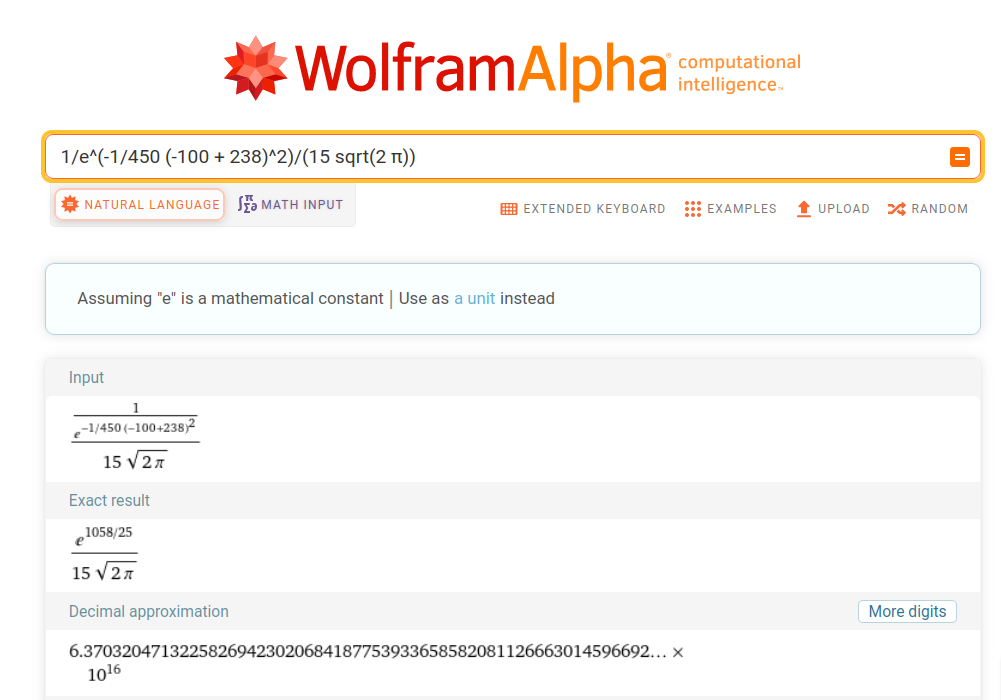

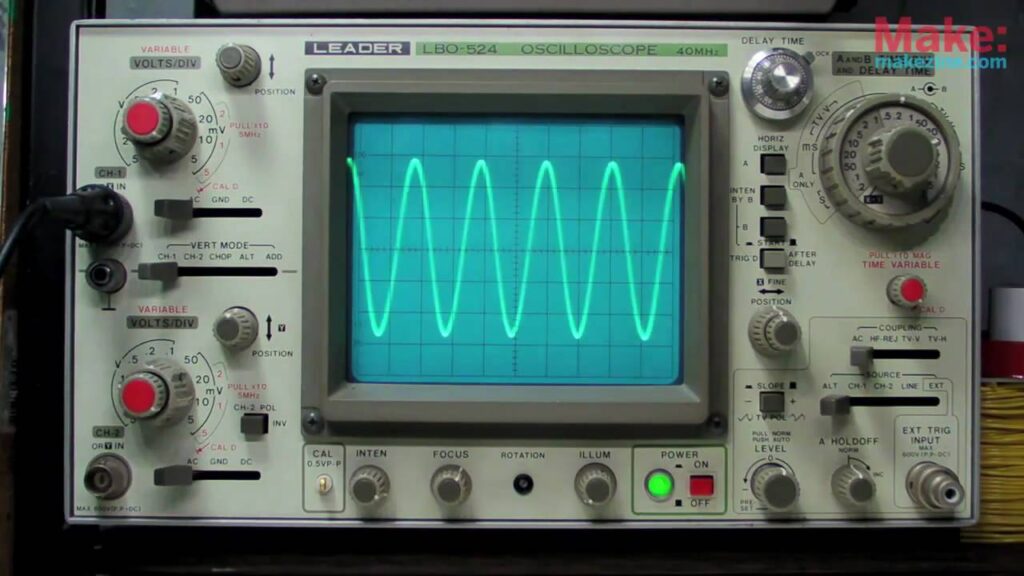



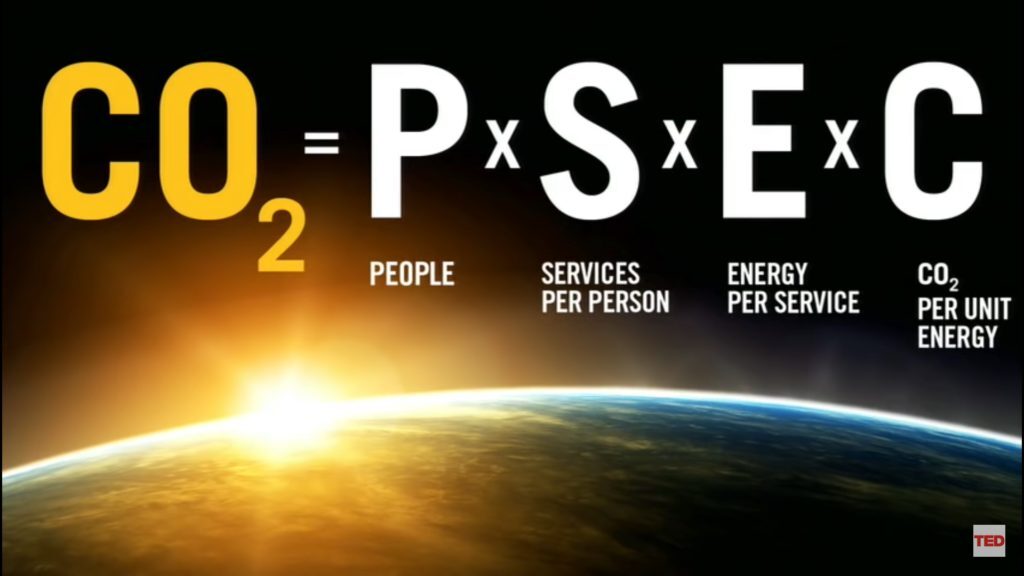
 (Eq. 1)
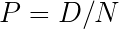 . But what have we done here? Nothing really, as we have introduced and defined a dependent variable P (damage done per person), and basically restated its definition. Note that D and N could have any meaning at all and this would remain true.
  , the number of attractive women is equal the the amount of butts on the floor times the women per butt.
 .
.